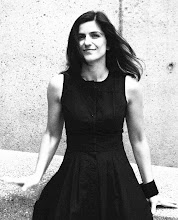
20150424

panel participant @Symbiotic Surfaces


Photos: Dan Hisel

Review and discussion of "Symbiotic Surfaces," an installation in the Casella Gallery as part of Advanced Topics 977. Friday, April 17th, with a viewing period from 3 to 3:30, and then a brief presentation, and scintillating discussion from 3:30 to 5. Invited by Dan Hisel. Together with Schultz, Anne-Catrin Schultz (WIT), William George O'Brien(wojr/MIT), Luis Carranza (RWU), Benjamin Peterson (BAC), Zenovia Toloudi (studio Z/Dartmouth).

Labels:

20140506

panel discussion: glimpse


 Panel Discussion organized by The Garage, as part of Thesis Lab 2014 review, WIT

Labels: ,

typical thursday: experiment / experience


Experiment / Experience by Dan Santacroce, as part of Thesis Lab 2014, WIT

Labels:

Thesis Lab 2014: the publication


Photo by Patrick Brady

Labels: ,

goodbye wit...


...it has been great 3 years!

Labels:

20140427

typical thursday projection mapping


Spatial experiments by Andrew Serfling, as part of Thesis Lab 2014

Labels: ,

20140426

exhibition-publication: April 26

Poster Design: Kaitlyn Payne
Research: Thesis Lab 2014

Labels: , ,

20140422

An acting workshop in architecture school?


In April 2013, as part of the MIT "Right to Architecture" Symposium, organized by Professor Nasser Rabbat and AKPIA,  I had presented the paper "Right to Architecture in Crisis" that addressed how performance and architecture are closely related in moments of crisis. Here is the abstract of my position:

Crisis comes with conflicts, instability, anxiety, and many other practical but also psychological problems. Democracy and freedom are often deteriorated to ensure stability; the public space disappears to allow the space of obedience to establish itself until the crisis dissolves. Recent movements, like the Occupy Movement, or Greece’s and Spain’s Indignants reacting to these conditions inhabit public space and transform it in a similar way to that of performing arts’ interventions. Based on the presumed relationship between dance (χορός/ khοrós) and space (χώρος/ chóros) as in the Ancient Greek Theater, the paper examines the possibility of performance to become crowd’s medium to participate in the production of architecture. More specifically performance within architecture is examined in the collaborative and interdisciplinary practice of Diller Scofidio + Renfro, who have been pioneers addressing architecturally the social, the body-politics, and surveillance-control problematics; the curatorial positions of Pedro Gadanho, in which performance implies participation; and the artistic work of Alex Schweder in which relationships between occupied spaces and occupying subjects are permeable. The paper eventually speculates a new type of architecture during crisis times that challenges the dysfunctional codes implied by the institutions, where the role of crowd is being redefined from the spectatorship to active engagement. 
At the same time, in  some of my courses, as for example the Thesis Lab studio I have been doing for 3 years at WIT, and the Installations and Public Space seminars I have been doing for 2 and 1 terms at BAC, my students research through various methods the role of performance in relationship to audience engagement in art or architectural work. 


  Stanislavski system / The Method / Method acting (excerpt text via Britannica):
Stanislavsky method, also called The Method, or Stanislavsky system ,  highly influential system of dramatic training developed over years of trial and error by the Russian actor, producer, and theoretician Konstantin Stanislavsky. He began with attempts to find a style of acting more appropriate to the greater realism of 20th-century drama than the histrionic acting styles of the 19th century. He never intended, however, to develop a new style of acting but rather meant to codify in teaching and performing regimens the ways in which great actors always have achieved success in their work, regardless of prevailing acting styles. The method requires that an actor utilize, among other things, his emotional memory (i.e., his recall of past experiences and emotions). The actor’s entrance onto the stage is considered to be not a beginning of the action or of his life as the character but a continuation of the set of preceding circumstances. The actor has trained his concentration and his senses so that he may respond freely to the total stage environment. Through empathic observation of people in many different situations, he attempts to develop a wide emotional range so that his onstage actions and reactions appear as if they were a part of the real world rather than a make-believe one. A risk in the Stanislavsky method is that, when role interpretation is based on the inner impulses of the performer, a scene may unexpectedly take on new directions. (This temptation was opposed by Stanislavsky himself, who demanded that the actor subordinate himself to the play.) Some directors are disposed against the method, seeing in it a threat to their control of a production. Many, however, find it especially useful during rehearsals in uncovering unsuspected nuances of character or of dramatic action. The method was widely practiced in the Soviet Union and in the United States, where experiments in its use began in the 1920s and continued in many schools and professional workshops, such as the prestigious Actors Studio in New York City.
 Meisner technique (excerpt text via Michael Checkov Actor Studio Boston):

The Meisner technique is a progressive system of structured improvisations for developing concentration and imagination, freeing instincts and impulses, and achieving “the reality of doing” in performance.“My approach,” Sandy Meisner said, “is based on bringing the actor back to his emotional impulses and to acting that is firmly rooted in the instinctive. It is based on the fact that all good acting comes from the heart, as it were, and that there’s no mentality to it.” In Meisner’s view, great acting depends on the actor’s impulsive response to what’s happening around him. His key exercise, spontaneous repetition, is designed for the actor to develop the capacity to respond impulsively to every stimulus. Meisner’s approach trains the actor to “live truthfully under imaginary circumstances,” to discover or create personally meaningful points of view with respect to the (written or improvised) word, and to express spontaneous human reactions and authentic emotion with the utmost sense of truth. Robert Duvall said of his teacher: “I owe everything I am, everything I’ve achieved as an actor to Sanford Meisner.... He made me aware that acting is... not speaking a text but creating behavior so that the emotional life underneath brings the text to life.”  Meisner technique is elaborated in the books, Sanford Meisner on Acting, by Mr. Meisner, and The Actor’s Art and Craft, by William Esper.
Grotowski Plastiques (excerpt text via Vanessa Boss):

In order for the actor to have the capabilities to express the “total act”(Grotowski, 125) without physical limitations, the actor must train in both vocally and physically. There are a series of physical exercises, which are used to allow the actor to become more in tune with their bodies and their internal presence. Grotowski was influenced greatly by oriental theatre including yoga, leading to the creation of what are known as plastiques. These exercises include a series of different positions, gestures and tumbles.Grotowski was greatly influenced by the Indian philosopher Patanjali who believed that “yoga removes the impurities from the body creating one being able to clearly notice their true self.”(Grotowski, 252) It is through the learning of physical techniques that in performance, the actor has the capability to physically move organically through almost a kind of improvisation. However what appears externally is the structure learnt through technique. The purpose of the exercise plastiques is to challenge the actor, not just physically but psychologically. Grotowski had developed these exercises following much experimentation. Originally, yoga was used to test whether or not the exercises could improve an actor’s “concentration” (Grotowski, 252) skills. Eventually what Grotowski found was that Yoga was the worst training an actor could possess, for it induces a lack of “thought”(Grotowski, 252) and slows the “breathing”(Grotowski, 252). “That means
all life processes are stopped and one finds fullness and fulfillment in conscious death, autonomy enclosed in our own kernel.”(Grotowski, 252) However what Grotowski did find to his advantage, was that “the associations of the body are also the associations of the feelings” (Grotowski, 253). At the same time, Grotowski recognized what yoga did do, was allow “a natural adaptation to space” (Grotowski, 253). Therefore he decided to modify these exercises to involve human interaction. By involving a partner in these exercises, the actor’s creativity looses limitations and can benefit further psychologically. From here, more and more physical exercises were developed most commonly through the actor’s desire to search for meaning, for presence. Dzieci similarly use these plastiques as a tactic to resolve a problem or to answer a question. For “Makbet”, the actors rehearsed specifically for certain physically demanding scenes, as Rebecca explained as “being present to what’s happening in my body.”(Rebecca Sokoll, Dzieci) In specific exercises, the Dzieci actors would learn a series of actions and once these actions became easy, they would increase in difficulty. “We are always increasing the demands, once we get really good at one thing, we are always increasing the difficulty.”(Matt Mitler, Dzieci) Through the addition of further challenges, what is most interesting is the struggle or the process to achieve such actions. Dzieci is constantly learning more about them selves through their bodies and through their physical and spiritual presence. Matt describes the struggles he personally faces and how he to resolve them: “I would put it in a way that I have to ask for help, I need to be in a place of deep question and I have to ask for help. Where I ask for help, what I ask for help, becomes something more interesting.”(Matt Mitler, Dzieci) This process is a never ending one, for the body is constantly changing as are the experience that the actor faces. However what is constant is the actor’s insight into their internal core. Specifically an example of a plastique in which Grotowski personally uses when training actors in his Laboratory involves the activation of the vertebral column. According to Grotowski, “The vertebral column is the centre of expression. The driving impulse, however, stems from the loins. Every live impulse begins in this region, even if invisible from the outside” (Grotowski, 191) This clarifies the connection between an actor’s physicality and emotion, being that energy first starts from within and the ability for it to be pushed into expression is found through a level of psychophysical awareness. The exercise is known as “Slow Motion” (Grotowski, 188), as described in “Towards a Poor Theatre” involving the actor to:

“Start from a standing position”
“From a headstand, change to a shoulder stand”.
“With the legs still in the air, transfer the weight of the body from the shoulder
to the back of the neck, the arms and hands on the ground for support.”
“Rolling - still in slow motion - with legs outstretched”
“Return to original standing position” (Grotowski, 188)
“This exercise must be done with a certain imaginary force. You must imagine you are in constant contact with someone in order to give the exercise a definite direction. The great expressive force of this exercise lies in the control of the leg muscles. The toes are constantly stretched in a fixed direction. When one of the legs reaches the point at the end of the movement on the ground, the arm takes over. Here coordination is essential. Just before the leg movement finishes, the arm starts moving in the same direction and in the same way.”(Grotowski, 189) It is important to highlight the necessity for the actor to be present in his body as though he is interacting with another. This is significant since the body is physically reacting to another, and through these reactions brings “truth” (Matt Mitler, Dzieci) to the movement.


Folland suggested to use architecture as a starting point for character development. How would one embody an animal, or a chair to create a character? Some other interesting concepts were framed around questions such as performance for a space, or building a space for performance. We also discussed the differences / similarities between acting and performance, linked to institutionalized or scripted acts, and fictious narratives. Folland thought the work of film director, and professional dancer Daphna Mero, in particular, her later efforts to deconstruct the space through the body are very relevant in relation to this interdisciplinary approach. 


Folland performed a series of exercises together with the students for approximately 2 hours. For the specific workshop we focused on mastering presentation of one's project and how body and voice exercises can help people to talk and disseminate their ideas to the public.


Labels: , ,

20140408

Thesis Lab Review: Notes

Thesis Lab 2014 has been about experimental architecture. It asked two big questions. 
On relevance: What matters as a contemporary architectural thesis?
On vision: What architects need and want to do with their practice?

The discussion at the end of the review opened up to the students who have been very enthusiastic about their experience in Thesis Lab. Some of them valued the freedom, the constant experimentation even at the very end, and the production of full-scale installations-architectures that offered themselves as experiences to us on a regular basis. (Within a term of 4 months, some students have completed 10 of those). In many occasions external critics expect (or not at all) from the students to "translate" their installation into what they call as architecture. In this class students took different approach to propose a building, a pavilion, another installation, or even a publication, as the final outcome of their experimentation. Many of those argued how their spatial experiments have been "architecture." The focus of the thesis studio has been indeed to find new forms of architecture and how the latest can become relevant to address bigger global contemporary concerns. The now historical example of the architects-artists Diller Scofidio & Renfro (DS+R), makes a good case to liberate many of the architects not to expect a translation between the installation and the building. It is hard to see the direct connections between the two different forms of work that DS+R have been testing throughout their careers. What is clear in their case (with the exception of the latest MOMA drama) is that whether it is a building, or a stage design, or an artwork, their creations make us shift our perspectives, boring routines, and have better quality of surroundings. 

Three particular students in Thesis Lab 2014 experimented full-scale weekly. They utilize all resources available, lot of time, and took risk to create multiple architectures for us to experience every Thursday, usually in room B. Their method has been to sculpt space, to make columns, walls, projections, to manipulate air, light, sound, color, shadows, kinesis, etc, to eventually construct new atmospheres in the crit room. The room, that can be compared to museum's white cube, acted as an open three-dimensional canvas for their creativity. One can imagine the effect of this formal experimentation in the future creations of these individuals. But even the current works can be easily re-configured to multiple functional spaces. Their motivation and investment to synthesize, compose, and critically experience these works have been impressive. Their examples contribute to the redefinition of Installation(s) term to belong more to the intersection of art and architecture (So one does not have to expect a translation). Their work is an expansion of a field started by Gordon Matta-Clark and continued by other contemporary ones (such as Junya Ishigami). 

Beyond these three examples of installations that act as experiments-experiences, there has been another set of installations, of different style, that of guerilla tactics. Two students have been installing their work to provoke their peers in joining them into a larger, more collaborative architectural experiment: They were motivated to create space through a publication. Their experiments created the need to rethink how public space is shared and used by the various individuals and groups of academia. Many questions were raised about the process and methods to occupy these spaces, the relevance of aesthetics (and polished work), as well as the enthusiasm or tolerance by the public to those temporal interventions. 

The emphasis is on the word temporal that comes with a large range. Temporary or/and ephemeral architecture has been in many cases the context of the studio work (in different scales too: expos, pavilions, kinetic structures). The role of play, performance, and events in architectural expressions definitely affects the duration of those architectures. Why architecture has to last forever (or very long)? There should be enough room for fantasy, imagination, and dreams to affect the current environments. 

Another issue tackled in many of the works had to do with the social whether this is linked to segregation, public realm, or shared spaces (and resources).

A list of all the works presented can be found in the Thesis Lab 2014 review invitation [Bee-Zee Link].
Notes on class methodology can be found in the text Why Thesis Lab? [Bee-Zee Link] also published at Wentworth Graduate Architecture Thesis Book (2014).
The documentation of the course work can be found in the Thesis Lab exhibition-publication [Bee-Zee Link].


Labels: ,

broadcast


Labels: ,

Thesis Lab 2014: invitation to final review

Thesis Lab 2014, WIT, Image credits: Tom McCormack


WIT, APRIL 8, 2014

Part A (12:30-3pm)

Guests: Jessica Cole, Kim Poliquin, Ian Taberner, Etien Santiago, Andrew Ferentinos, Ben Peterson

Thesis Projects:

12:30pm // Crit room C

o   Stitching Society: Through Integrated Community Design, Michelle Bellucci

1pm // Crit space G

o   Micro-tecture: Reimagining the Urban Bus Stop and Bench, Caitlin Pandolph

o   Spectacle of Kinetic Structures: Bringing Function through Attraction, Jim Gibbons

2pm // Crit room A

o   Bio-Breathe Pavilion, Nick Gregshak

o   Liquidity of Architecture: Through Material and Tectonic Exploration, Ashley Brassette

Part B (3-6pm)

Guests: Carol Burns, Jennifer Lee, Jonathan Foote, Kaitlyn Payne, Sinead Gallivan, Zhanina Boyadzhieva

Thesis Projects:

3pm // Crit room A

o   Converse / Construct: Cur[e]ating a Contemporary Form of Agora, Pat Brady

o   The {Symbiotic} Cloud: Architecture of the Garage, Tom McCormack

4 pm // Crit room D

o   Interactive Surveillance: An Urban Network for Public Play, Richard Pignataro


5pm // Crit rooms E & B

o   Transparency & Illusion:  An Experience of Perception, Dan Santacroce

o   Blending by Destroying: Color, Light, and the Destruction of Form, Andrew Serfling

Labels: ,

20140309

Why Thesis Lab?

Thesis Lab follows a learning-through-making pedagogy that integrates research, critical theory, individual voice, and hands-on collaborative work. Influenced by Bruno Latour’s theories on laboratories, and Jacques Rancières’ theories on education and emancipation the course is developed around the duality of laboratory and exhibition to simultaneously emphasize experimentation (laboratory as process) and dissemination, both towards the architectural discourse and architecture’s multiple publics (exhibition as final outcome). The laboratory includes hands-on experiments, testing of theories, analysis of the results, development of models, and the making of installations, mock-ups or prototypes. The exhibition includes design and presentation of exhibitions, publications, participation in blogs, social media, and other platforms, and engagement with communities and various groups.

To understand user’s participation and engagement in their work, participants have been developing a series of installations and ephemeral spaces to be presented collectively every week in the typical (architectural) crit room B that now transforms to an experimental “white cube” (museum) room. Bringing art and the museum in the architectural studio, Thesis Lab proposes exhibition as a pedagogical tool to experience, experiment, learn, and reflect on a series of concerns.

Thesis Lab balances individual and team work in various formats to occasionally challenge design authorship without eliminating the individual voice. Participants may envision professional scenarios beyond the architectural profession as service. Collective non-hierarchical groups or actions may offer to individual creators the opportunity to instigate interventions: the design and production of their own architectures that improve their surroundings and environments.

Thesis Lab favors an interdisciplinary approach by seeking the other experts (eg. the chemist, the biologist, the psychologist, the technologist, the performer) through individual and group meetings, invited lectures, as well as organized workshops. The interdisciplinary experimentation occurs both at small and big scale. For example some of the projects integrate technological applications (eg. projectors, microcontrollers, sensors, and motors), while being inspired by theories on social media and networks (eg. hacking, digital nomadism, surveillance). 

Part of the research presented in this book[i] builds upon previous educational experiments such as Neoplayformz, an exhibition as an assembly of experiences in which the audience transformed from a spectator, to a (newspaper) reader, to a climber, to a gamer, to a guinea pig through a food experiment. Thesis Lab has been challenging what constitutes an architectural methodology for the last 3-years at WIT.

[i] The text is going to be part of WIT 's upcoming publication with graduate thesis works of 2014.


Labels: ,

20140302

Thesis Lab midterms

Experiencing Andrew Serfling's installation as part of Thesis Lab 2014 midterm reviews at WIT (via The Garage)

Feb 20, 2014

Labels:

20131213

exhibition catalogue


Publication edited by Patrick Brady
Photographs by Patrick Brady

Labels: , ,

finding agora: 13.12.13


Labels: ,

20131029

Thesis Lab Spring 2014 menu


Labels:

20130613

tables


The tables in the photos come from Groundwork exhibition. They were photographed by Samantha Altieri.

Labels:

20130612

contemporary discourse

Groundwork panel in Blount Auditorium, WIT. Photo credits: Samantha Altieri
In May I was invited to participate in a panel discussion together with historian Mark Neveu and landscape architect Mark Klopfer, both teaching at WIT as Associate Professors. The panel was organized by the graduate students, some of them currently involved in the launching of .DAT journal. Liem Than and Sam Walusimbi set up a series of dualities embracing the contemporary discourse, like theory/ practice, inter-discipline/ discipline, landscape/ landscape architecture, post-critical/ critical, installation/ architecture. According to Erblin Bucaliu these themes are understood as the "ground" onto which architecture is discussed today (therefore the title of the exhibition: Groundwork). The event gave me an opportunity to think what is my opinion about some of those issues.  Here are some of my notes and thoughts as these evolved as well during the discussion. 

On the architect's career:

It seems that many of the recent graduates have the limited choice of working either for a corporate office or the boutique firm, both of which come together with annoying situations. Pedro Gadanho has a lot of hope for this new generation. In this excerpt from his recent interview with Kazys Varnelis at Domus one can read: 
 KV: Perhaps the current generation's political stance comes out of disgust with that the building boom, and the apolitical, or rather neoliberal approach to architecture associated with it.
PG: Yes, since the new generation was taught right in the midst of the star system, they felt they had to react to that, to architecture as a signature game, a branding device for the corporate world. This generation felt that they would have to do something else. I remember always hearing from people, like my father, outside the profession who saw it as a totally cannibalistic profession that was always backfiring against itself. If you run your offices with unpaid and exploited interns, they will either grow to hate the system or will wind up replicating the system. It's constantly destroying architecture from within because professionals don't seem to have self-esteem towards their own activity. But now young people are refusing the star system and the whole route of working for a star, and instead are working through different channels.
What would it be a more social role of the architect as a professional? I think more and more students are trying to respond to this question. While discussing this topic together with the two Mark(s), Mark Neveu mentioned that architecture becomes more and more a knowledge field and "her" graduates become individuals with great assets (my own interpretation of his statement). 

On Installations:
In my own practice (and pedagogy) I have selected the path of installations/ exhibitions as an alternative path to the profession, independent from the rich client, and even the academic network (if I may say). Not only the installations offer me a testing ground, an experiential event, and engagement with people ("users of architecture"), but it also provides a communication device that aims to intervene and actively alter a "problematic" situation. Could this be an ephemeral (or epheme-real) utopia?
An interesting question regarding installations, asked by Nate Gove, dealt with the distinction between architect (doing representations) versus architect-maker (doing installations). 

On criticism: 

My doctoral dissertation at Harvard GSD, and Picanico experiment are in fact a/my critique on criticism. I developed a theory and a platform where experts meet the public, practice meets theory, and preferences meet needs. If we compare architectural taste to the gastronomical taste, one can quickly identify three categories of people involved: cooks, consumers, and connoisseurs. Petros Tatsopoulos, a Greek fiction writer (currently also politician among other things) writes in his Τιμής ένεκεν novel published in 2004: 
"I can stand anything from someone that knows how to cook... I am fed up with experts for cuisine. I am sick of connoisseurs...i want to listen to the cooks themselves..."
In his S,M,L,XL book published in 1995, Rem Koolhaas, shares his ideas about the the role of the critic in architecture; 
"We are suffering from the inability of the critics to analyze what we are really doing, to show what we are not doing, or to suggest what we should be doing. We need the critics to be our partners, not our alies, and evenless our business representatives."
During the panel, big part of the discussion moved toward the role of the critics in local newspapers. I could not stop thinking of the beloved Folk Museum, now being threatened for demolition. I clearly remember my talk with Sanford Kwinter at Harvard GSD few years ago where he would suggest to me: When thinking the audience, differentiate somehow and peak the most sophisticated one, like for example the audience that reads NYT. I researched all their articles in the Art/ Architecture section for a number of years and extract to some extend some patterns in the language and the approach. Can perhaps this trained audience prevent the disaster? Or is it the Facebook crowd, the so-much-negatively-critiqued-liking-generation, the one to save it? Who knows? Neveu emphasized the need for critics within the public realm (beyond the profession) like Geoff Manaugh. Could these perhaps develop the power to affect public opinion? Neveu referred to the notion of tribes (and trends) where groups develop specific codes of communication and patterns of behavior difficult to be uncoded by the outsiders.

On nature:  

The discussion regarding nature and landscape started from the notion that nature is artificial. Mark Klopfer, landscape architect of the recently awarded (as innovative urban place-making) Steel Yard in Providence, Rhode Island talked about a number of interesting concepts, hard to transfer in the blog without transcripts of the discussion. Myself I am very interested to re-configure the relationship between nature and architecture. An effort where one is not "erasing" the other, but they simply co-exist, can be depicted in my work  for the last 2 years, with Photodotes and Zitofos. Due to this effort, my love for Japanese Architecture, and my recent visit to Tokyo, I become more and more intrigued by the phenomenon of nature becoming fetichization (spatial fetishes) within contemporary lifestyle and architecture. 

As I close this post, I would like to mention Rith Ean, who is a 2nd year undergraduate student from Cambodia, with a remarkable presence through his work and positions in various initiatives and events. He asked about the possibility of form existing without function, which is a brave question to ask, especially within the context of an institution focusing on practice and functionality. All the graduate students involved, worked really hard to produce the Groundwork exhibition, this panel discussion, and to submit their own thesis on time. Their passion and dedication, together with their kind character give some hope. Some special credits to Sam Altieri, and also JT White who were behind this event too.

Mark Neveu, Liem Than, Sam Walusimbi, Mark Klopfer, & ZT. Photo credits: Samantha Altieri

Labels: ,

20130610

on methodology

Groundwork publication: sketchbook & catalogue with a map. Photo credits: DAT journal


In two recent posts, I had referred to Groundwork symposium & exhibition that took place at Wentworth Architecture in May. Here is my contribution to the exhibition's publication that includes my approach on methodology through my pedagogy:

On Methodology

The word methodology is etymologically linked to the Ancient Greek word μέθοδος (=method); a composite word deriving from two words: μετά (= meta/ after), and οδός(= hodos/ way, threshold, path, journey). Originally the word means the branch of knowledge (-ology) that seeks what follows after. My approach on methodology directly derives from my teaching pedagogy, which prioritizes learning through making, experimentation, and individual voice. This view on relationships between methodology and thesis can be summarized by the Protheses and Thesis Lab efforts. 

Protheses, a composite word deriving from pro (=pro, before) and theses (=positions), deals with all the research occurring prior to development of a thesis statement with emphasis towards an original one. Beyond this meaning of the required literature review that acknowledges the discourse, protheses also means intentions deriving from the original Greek word προθέσεις (= protheses). Through Protheses, I have been highlighting the need for both a rigorous (literature review), and a personal approach (one's intentions). To further expand what a methodology is, I curated the Protheses lecture series where I invited experts from diverse fields to present their design-research methodologies. Through these lectures, I have been interested to create analogies and loans between those fields and architecture, and to also engage the students into advanced workshops, conferences, and initiatives beyond Wentworth community. 

Thesis Lab, a term I developed for the Thesis studio emphasizes the experimental character a methodology may have, but also the potential links to other sciences, which may have (or not) already developed a rigorous methodology for their own purposes. In Thesis Lab I have been testing, together with the students, as potential architectural methodologies the following actions through repetition: experiments and tests, experiences and events, narratives and fiction, surveys and data collection, games and play, exhibitions and publications. 

This Spring, the studio collectively tested the idea of an exhibition on methodologies. Neoplayformz exhibition has been less of a collection of artifacts, and more of an assembly of experiences in which its audience transformed from a spectator, to a (newspaper) reader, to a climber, to a gamer, to a guinea pig through a food experiment. The idea of an exhibition as an educational approach emerged out of the extensive use in both courses of e-publishing, where students use blogs and media platforms to comparatively document, and reflect on, their progress, and to essentially form their own experimental methodology from day 1: Through the constant action of exhibiting or/ and publishing, the students have been contributing their positions to the discourse through dialogue with the guests who are no longer reviewers, or guest crits, but co-producers in this experiment/ effort.

Zenovia Toloudi, Cambridge, May 2013

Table with printed catalogues/ sketchbooks. Photo credits: Samantha Altieri


Groundwork was curated by the Student Exhibition Committee, which included Sam Altieri, Viviana Bernal, Erblin Bucaliu, Casey Galante, Nate Gove, Danielle Gray, Steven Hien, Bao Nguyen, Sam Partington, Liem Than, Mike Wojnarowicz, Craig Zygmund, Ryan Kahen as well as Joe Meucci, Sam Walusimbi and JT White from .DAT. 
Print copies for the publication may be available via DAT journal 
[ thedatjournal@gmail.com/ twitter: @itsdat_ ]

Labels: ,

20130511

women's business

Last week I had the opportunity to prepare and perform a show with 2 exceptional women (architects and educators), Carol Burns (middle) and Elizabeth Ghiseline (left). I really enjoyed the actual experience of my latest theoretical interest in performance, as well as the lesson of what one individual is capable of doing. And yes, I confirm Ms. Marina Abramović 's statement: it is impossible to rehearse without the audience.


Satisfaction and happiness after completing this task:

Labels: ,