20140506


20140427


20140426

20140422
An acting workshop in architecture school?

In April 2013, as part of the MIT "Right to Architecture" Symposium, organized by Professor Nasser Rabbat and AKPIA, I had presented the paper "Right to Architecture in Crisis" that addressed how performance and architecture are closely related in moments of crisis. Here is the abstract of my position:
Crisis comes with conflicts, instability, anxiety, and many other practical but also psychological problems. Democracy and freedom are often deteriorated to ensure stability; the public space disappears to allow the space of obedience to establish itself until the crisis dissolves. Recent movements, like the Occupy Movement, or Greece’s and Spain’s Indignants reacting to these conditions inhabit public space and transform it in a similar way to that of performing arts’ interventions. Based on the presumed relationship between dance (χορός/ khοrós) and space (χώρος/ chóros) as in the Ancient Greek Theater, the paper examines the possibility of performance to become crowd’s medium to participate in the production of architecture. More specifically performance within architecture is examined in the collaborative and interdisciplinary practice of Diller Scofidio + Renfro, who have been pioneers addressing architecturally the social, the body-politics, and surveillance-control problematics; the curatorial positions of Pedro Gadanho, in which performance implies participation; and the artistic work of Alex Schweder in which relationships between occupied spaces and occupying subjects are permeable. The paper eventually speculates a new type of architecture during crisis times that challenges the dysfunctional codes implied by the institutions, where the role of crowd is being redefined from the spectatorship to active engagement.At the same time, in some of my courses, as for example the Thesis Lab studio I have been doing for 3 years at WIT, and the Installations and Public Space seminars I have been doing for 2 and 1 terms at BAC, my students research through various methods the role of performance in relationship to audience engagement in art or architectural work.

Stanislavski system / The Method / Method acting (excerpt text via Britannica):
Stanislavsky method, also called The Method, or Stanislavsky system , highly influential system of dramatic training developed over years of trial and error by the Russian actor, producer, and theoretician Konstantin Stanislavsky. He began with attempts to find a style of acting more appropriate to the greater realism of 20th-century drama than the histrionic acting styles of the 19th century. He never intended, however, to develop a new style of acting but rather meant to codify in teaching and performing regimens the ways in which great actors always have achieved success in their work, regardless of prevailing acting styles. The method requires that an actor utilize, among other things, his emotional memory (i.e., his recall of past experiences and emotions). The actor’s entrance onto the stage is considered to be not a beginning of the action or of his life as the character but a continuation of the set of preceding circumstances. The actor has trained his concentration and his senses so that he may respond freely to the total stage environment. Through empathic observation of people in many different situations, he attempts to develop a wide emotional range so that his onstage actions and reactions appear as if they were a part of the real world rather than a make-believe one. A risk in the Stanislavsky method is that, when role interpretation is based on the inner impulses of the performer, a scene may unexpectedly take on new directions. (This temptation was opposed by Stanislavsky himself, who demanded that the actor subordinate himself to the play.) Some directors are disposed against the method, seeing in it a threat to their control of a production. Many, however, find it especially useful during rehearsals in uncovering unsuspected nuances of character or of dramatic action. The method was widely practiced in the Soviet Union and in the United States, where experiments in its use began in the 1920s and continued in many schools and professional workshops, such as the prestigious Actors Studio in New York City.Meisner technique (excerpt text via Michael Checkov Actor Studio Boston):
The Meisner technique is a progressive system of structured improvisations for developing concentration and imagination, freeing instincts and impulses, and achieving “the reality of doing” in performance.“My approach,” Sandy Meisner said, “is based on bringing the actor back to his emotional impulses and to acting that is firmly rooted in the instinctive. It is based on the fact that all good acting comes from the heart, as it were, and that there’s no mentality to it.” In Meisner’s view, great acting depends on the actor’s impulsive response to what’s happening around him. His key exercise, spontaneous repetition, is designed for the actor to develop the capacity to respond impulsively to every stimulus. Meisner’s approach trains the actor to “live truthfully under imaginary circumstances,” to discover or create personally meaningful points of view with respect to the (written or improvised) word, and to express spontaneous human reactions and authentic emotion with the utmost sense of truth. Robert Duvall said of his teacher: “I owe everything I am, everything I’ve achieved as an actor to Sanford Meisner.... He made me aware that acting is... not speaking a text but creating behavior so that the emotional life underneath brings the text to life.” Meisner technique is elaborated in the books, Sanford Meisner on Acting, by Mr. Meisner, and The Actor’s Art and Craft, by William Esper.Grotowski Plastiques (excerpt text via Vanessa Boss):
In order for the actor to have the capabilities to express the “total act”(Grotowski, 125) without physical limitations, the actor must train in both vocally and physically. There are a series of physical exercises, which are used to allow the actor to become more in tune with their bodies and their internal presence. Grotowski was influenced greatly by oriental theatre including yoga, leading to the creation of what are known as plastiques. These exercises include a series of different positions, gestures and tumbles.Grotowski was greatly influenced by the Indian philosopher Patanjali who believed that “yoga removes the impurities from the body creating one being able to clearly notice their true self.”(Grotowski, 252) It is through the learning of physical techniques that in performance, the actor has the capability to physically move organically through almost a kind of improvisation. However what appears externally is the structure learnt through technique. The purpose of the exercise plastiques is to challenge the actor, not just physically but psychologically. Grotowski had developed these exercises following much experimentation. Originally, yoga was used to test whether or not the exercises could improve an actor’s “concentration” (Grotowski, 252) skills. Eventually what Grotowski found was that Yoga was the worst training an actor could possess, for it induces a lack of “thought”(Grotowski, 252) and slows the “breathing”(Grotowski, 252). “That means
all life processes are stopped and one finds fullness and fulfillment in conscious death, autonomy enclosed in our own kernel.”(Grotowski, 252) However what Grotowski did find to his advantage, was that “the associations of the body are also the associations of the feelings” (Grotowski, 253). At the same time, Grotowski recognized what yoga did do, was allow “a natural adaptation to space” (Grotowski, 253). Therefore he decided to modify these exercises to involve human interaction. By involving a partner in these exercises, the actor’s creativity looses limitations and can benefit further psychologically. From here, more and more physical exercises were developed most commonly through the actor’s desire to search for meaning, for presence. Dzieci similarly use these plastiques as a tactic to resolve a problem or to answer a question. For “Makbet”, the actors rehearsed specifically for certain physically demanding scenes, as Rebecca explained as “being present to what’s happening in my body.”(Rebecca Sokoll, Dzieci) In specific exercises, the Dzieci actors would learn a series of actions and once these actions became easy, they would increase in difficulty. “We are always increasing the demands, once we get really good at one thing, we are always increasing the difficulty.”(Matt Mitler, Dzieci) Through the addition of further challenges, what is most interesting is the struggle or the process to achieve such actions. Dzieci is constantly learning more about them selves through their bodies and through their physical and spiritual presence. Matt describes the struggles he personally faces and how he to resolve them: “I would put it in a way that I have to ask for help, I need to be in a place of deep question and I have to ask for help. Where I ask for help, what I ask for help, becomes something more interesting.”(Matt Mitler, Dzieci) This process is a never ending one, for the body is constantly changing as are the experience that the actor faces. However what is constant is the actor’s insight into their internal core. Specifically an example of a plastique in which Grotowski personally uses when training actors in his Laboratory involves the activation of the vertebral column. According to Grotowski, “The vertebral column is the centre of expression. The driving impulse, however, stems from the loins. Every live impulse begins in this region, even if invisible from the outside” (Grotowski, 191) This clarifies the connection between an actor’s physicality and emotion, being that energy first starts from within and the ability for it to be pushed into expression is found through a level of psychophysical awareness. The exercise is known as “Slow Motion” (Grotowski, 188), as described in “Towards a Poor Theatre” involving the actor to:
“Start from a standing position”“This exercise must be done with a certain imaginary force. You must imagine you are in constant contact with someone in order to give the exercise a definite direction. The great expressive force of this exercise lies in the control of the leg muscles. The toes are constantly stretched in a fixed direction. When one of the legs reaches the point at the end of the movement on the ground, the arm takes over. Here coordination is essential. Just before the leg movement finishes, the arm starts moving in the same direction and in the same way.”(Grotowski, 189) It is important to highlight the necessity for the actor to be present in his body as though he is interacting with another. This is significant since the body is physically reacting to another, and through these reactions brings “truth” (Matt Mitler, Dzieci) to the movement.
“From a headstand, change to a shoulder stand”.
“With the legs still in the air, transfer the weight of the body from the shoulder
to the back of the neck, the arms and hands on the ground for support.”
“Rolling - still in slow motion - with legs outstretched”
“Return to original standing position” (Grotowski, 188)


Folland suggested to use architecture as a starting point for character development. How would one embody an animal, or a chair to create a character? Some other interesting concepts were framed around questions such as performance for a space, or building a space for performance. We also discussed the differences / similarities between acting and performance, linked to institutionalized or scripted acts, and fictious narratives. Folland thought the work of film director, and professional dancer Daphna Mero, in particular, her later efforts to deconstruct the space through the body are very relevant in relation to this interdisciplinary approach.

 Folland performed a series of exercises together with the students for approximately 2 hours. For the specific workshop we focused on mastering presentation of one's project and how body and voice exercises can help people to talk and disseminate their ideas to the public.
Labels: performance, thesislab, wit
20140408
Thesis Lab Review: Notes
Thesis Lab 2014 has been about experimental architecture. It asked two big questions.
On relevance: What matters as a contemporary architectural thesis?
On vision: What architects need and want to do with their practice?
The discussion at the end of the review opened up to the students who have been very enthusiastic about their experience in Thesis Lab. Some of them valued the freedom, the constant experimentation even at the very end, and the production of full-scale installations-architectures that offered themselves as experiences to us on a regular basis. (Within a term of 4 months, some students have completed 10 of those). In many occasions external critics expect (or not at all) from the students to "translate" their installation into what they call as architecture. In this class students took different approach to propose a building, a pavilion, another installation, or even a publication, as the final outcome of their experimentation. Many of those argued how their spatial experiments have been "architecture." The focus of the thesis studio has been indeed to find new forms of architecture and how the latest can become relevant to address bigger global contemporary concerns. The now historical example of the architects-artists Diller Scofidio & Renfro (DS+R), makes a good case to liberate many of the architects not to expect a translation between the installation and the building. It is hard to see the direct connections between the two different forms of work that DS+R have been testing throughout their careers. What is clear in their case (with the exception of the latest MOMA drama) is that whether it is a building, or a stage design, or an artwork, their creations make us shift our perspectives, boring routines, and have better quality of surroundings.
Three particular students in Thesis Lab 2014 experimented full-scale weekly. They utilize all resources available, lot of time, and took risk to create multiple architectures for us to experience every Thursday, usually in room B. Their method has been to sculpt space, to make columns, walls, projections, to manipulate air, light, sound, color, shadows, kinesis, etc, to eventually construct new atmospheres in the crit room. The room, that can be compared to museum's white cube, acted as an open three-dimensional canvas for their creativity. One can imagine the effect of this formal experimentation in the future creations of these individuals. But even the current works can be easily re-configured to multiple functional spaces. Their motivation and investment to synthesize, compose, and critically experience these works have been impressive. Their examples contribute to the redefinition of Installation(s) term to belong more to the intersection of art and architecture (So one does not have to expect a translation). Their work is an expansion of a field started by Gordon Matta-Clark and continued by other contemporary ones (such as Junya Ishigami).
Beyond these three examples of installations that act as experiments-experiences, there has been another set of installations, of different style, that of guerilla tactics. Two students have been installing their work to provoke their peers in joining them into a larger, more collaborative architectural experiment: They were motivated to create space through a publication. Their experiments created the need to rethink how public space is shared and used by the various individuals and groups of academia. Many questions were raised about the process and methods to occupy these spaces, the relevance of aesthetics (and polished work), as well as the enthusiasm or tolerance by the public to those temporal interventions.
The emphasis is on the word temporal that comes with a large range. Temporary or/and ephemeral architecture has been in many cases the context of the studio work (in different scales too: expos, pavilions, kinetic structures). The role of play, performance, and events in architectural expressions definitely affects the duration of those architectures. Why architecture has to last forever (or very long)? There should be enough room for fantasy, imagination, and dreams to affect the current environments.
Another issue tackled in many of the works had to do with the social whether this is linked to segregation, public realm, or shared spaces (and resources).
A list of all the works presented can be found in the Thesis Lab 2014 review invitation [Bee-Zee Link].
Notes on class methodology can be found in the text Why Thesis Lab? [Bee-Zee Link] also published at Wentworth Graduate Architecture Thesis Book (2014).
The documentation of the course work can be found in the Thesis Lab exhibition-publication [Bee-Zee Link].
Notes on class methodology can be found in the text Why Thesis Lab? [Bee-Zee Link] also published at Wentworth Graduate Architecture Thesis Book (2014).
The documentation of the course work can be found in the Thesis Lab exhibition-publication [Bee-Zee Link].
Thesis Lab 2014: invitation to final review
 |
| Thesis Lab 2014, WIT, Image credits: Tom McCormack |
WIT, APRIL 8, 2014
Part A (12:30-3pm)
Guests: Jessica Cole, Kim Poliquin, Ian Taberner, Etien Santiago, Andrew Ferentinos, Ben Peterson
Thesis Projects:
12:30pm // Crit room C
o Stitching Society: Through Integrated Community Design, Michelle Bellucci
1pm // Crit space G
o Micro-tecture: Reimagining the Urban Bus Stop and Bench, Caitlin Pandolph
o Spectacle of Kinetic Structures: Bringing Function through Attraction, Jim Gibbons
2pm // Crit room A
o Bio-Breathe Pavilion, Nick Gregshak
o Liquidity of Architecture: Through Material and Tectonic Exploration, Ashley Brassette
Part B (3-6pm)
Guests: Carol Burns, Jennifer Lee, Jonathan Foote, Kaitlyn Payne, Sinead Gallivan, Zhanina Boyadzhieva
Thesis Projects:
3pm // Crit room A
o Converse / Construct: Cur[e]ating a Contemporary Form of Agora, Pat Brady
o The {Symbiotic} Cloud: Architecture of the Garage, Tom McCormack
4 pm // Crit room D
o Interactive Surveillance: An Urban Network for Public Play, Richard Pignataro
5pm // Crit rooms E & B
o Transparency & Illusion: An Experience of Perception, Dan Santacroce
o Blending by Destroying: Color, Light, and the Destruction of Form, Andrew Serfling
20140309
Why Thesis Lab?
Thesis
Lab follows a learning-through-making
pedagogy that integrates research, critical theory, individual voice, and
hands-on collaborative work. Influenced by Bruno Latour’s theories on
laboratories, and Jacques Rancières’ theories on education and emancipation the
course is developed around the duality of laboratory
and exhibition to simultaneously emphasize experimentation (laboratory as
process) and dissemination, both towards the architectural discourse and architecture’s
multiple publics (exhibition as final outcome). The laboratory includes hands-on experiments, testing of theories,
analysis of the results, development of models, and the making of
installations, mock-ups or prototypes. The exhibition
includes design and presentation of exhibitions, publications, participation
in blogs, social media, and other platforms, and engagement with communities
and various groups.
To understand user’s participation and
engagement in their work, participants have been developing a series of
installations and ephemeral spaces to be presented collectively every week in
the typical (architectural) crit room B that now transforms to an experimental “white
cube” (museum) room. Bringing art and the museum in the architectural studio, Thesis Lab proposes exhibition as a
pedagogical tool to experience, experiment, learn, and reflect on a series of concerns.
Thesis
Lab balances individual
and team work in various formats to occasionally challenge design authorship
without eliminating the individual voice. Participants may envision
professional scenarios beyond the architectural profession as service.
Collective non-hierarchical groups or actions may offer to individual creators
the opportunity to instigate interventions: the design and production of their own
architectures that improve their surroundings and environments.
Thesis
Lab favors an
interdisciplinary approach by seeking the
other experts (eg. the chemist, the biologist, the psychologist, the
technologist, the performer) through individual and group meetings, invited
lectures, as well as organized workshops. The interdisciplinary experimentation
occurs both at small and big scale. For example some of the projects integrate
technological applications (eg. projectors, microcontrollers, sensors, and
motors), while being inspired by theories on social media and networks (eg. hacking,
digital nomadism, surveillance).
Part of the research presented in this book[i] builds upon previous educational experiments such as Neoplayformz, an exhibition as an assembly of experiences in which the audience transformed from a spectator, to a (newspaper) reader, to a climber, to a gamer, to a guinea pig through a food experiment. Thesis Lab has been challenging what constitutes an architectural methodology for the last 3-years at WIT.
Part of the research presented in this book[i] builds upon previous educational experiments such as Neoplayformz, an exhibition as an assembly of experiences in which the audience transformed from a spectator, to a (newspaper) reader, to a climber, to a gamer, to a guinea pig through a food experiment. Thesis Lab has been challenging what constitutes an architectural methodology for the last 3-years at WIT.
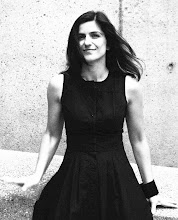
Zenovia Toloudi is architect, artist, and Assistant Professor at Studio Art, Dartmouth College.
NOW
- studio Z
- Z profile
- ZITOFOS
- PICANICO
- recent projects
- Agora studio
- pop-up store workshop
- photodotes III: plug-n-plant
- Right to Architecture Symposium MIT
- ACSA San Francisco
- Food Truck Conference
- Atmosphere Symposium
- MIT Museum
- MIT Museum
- Energy Night MIT
- OFF/ON lecture
- Urban Micro-Oasis workshop
- Made in Greece Plus
- Crisis Panel @ GSD
- For-here-or-to-go? cloud
- The Garden Lab
- Photodotes II
- Photodotes I
- To Extremes
- Thesis Lab @ WIT
- Protheses @ WIT
- pechakucha boston No 4-26
- brain.storms
- gnomi award
- F2F
- festival miden
- un-built [MCUS in athens]
- eikones.ch [switzerland]
- design computing + cognition [DCC08]
- critical digital conference: what matters[s]?
- pecha kucha talk
- 1st thessaloniki biennale of contemporary art
- arch.city.art
- talk20
- Black with a Red Touch
- A Private or Public Sleeping Space?
- Archipelago Logic: Environmental Site Specific Art
- Goodbye Starachitecture, Welcome Countryside! Dis-appearances in Rem’s Lecture
- On Game Design: The New Spaces, Objects & Methods of FWD Talks
- The Participant, the Experience, and the Event: Experience Economies
- Towards an eternal contemporaneity: A playground of living systems, physical states, and phenomena
- Playing with circles, curves, and SO-IL
- MIT Media Lab: Architecture as a living organism
- Lichtballett: Can space be shaped out of light, sound, and movement?
- 200602
- 200603
- 200604
- 200605
- 200606
- 200608
- 200609
- 200610
- 200611
- 200612
- 200701
- 200702
- 200703
- 200704
- 200705
- 200706
- 200707
- 200708
- 200709
- 200710
- 200711
- 200712
- 200801
- 200802
- 200803
- 200804
- 200806
- 200807
- 200808
- 200809
- 200810
- 200811
- 200812
- 200901
- 200902
- 200903
- 200904
- 200905
- 200907
- 200909
- 200910
- 200911
- 200912
- 201001
- 201002
- 201003
- 201004
- 201005
- 201006
- 201007
- 201008
- 201009
- 201010
- 201011
- 201012
- 201101
- 201102
- 201103
- 201104
- 201105
- 201106
- 201107
- 201108
- 201109
- 201110
- 201111
- 201112
- 201201
- 201202
- 201203
- 201204
- 201205
- 201206
- 201207
- 201208
- 201209
- 201210
- 201211
- 201212
- 201301
- 201302
- 201303
- 201304
- 201305
- 201306
- 201307
- 201308
- 201309
- 201310
- 201311
- 201312
- 201401
- 201402
- 201403
- 201404
- 201405
- 201406
- 201407
- 201408
- 201409
- 201410
- 201411
- 201412
- 201501
- 201502
- 201503
- 201504
- 201505
- 201506
- 201507
- 201508
- 201509
- 201510
- 201511
- 201512
- 201601
- 201602
- 201603
- 201604
- 201605
- 201606
- 201607
- 201608
- 201609
- 201610
- 201611
- 201612
- 201701
- 201702
- 201703
- 201704
- 201705
- 201706
- 201707
- 201708
- 201709
- 201710
- 201711
- 201801
- 201802
- 201803
- 201804
- 201805
- 201807
- 201810
- 201812
- 201901
- 201903
- 201906
- 201909
- 201911
- 201912
- 202001
- 202002
- 202003
- 202005
- 202006
- 202007
- 202011
- 202101
- 202102
- 202105
- 202106
- 202112
- 202206
- 202301
- 202406
- 202407
- Architecture as Invention
- bz @Changing Cities
- From theatre to factory to...
- work during post-remote (GSD panel)
- Architecture is workshop
- single-minded
- becomes again
- Dedes
- the man is a guest house
- A New Rule
- m&m-M&M
- lsd:mies
- kites
- brazil_2
- sesc-pompeii
- velvet lounge
- ny
- mendes_leme
- mcc_2
- BEE-ZEE is on vacation
- b-z is back to chicago
- you can not invent a new architecure every monday morning
- [ f f f ]
- archidose
- architechnophilia
- archtect-ntua
- architecture
- AR_LAV
- anArchitecture
- angelidakis
- athens9
- BLDGBLOG
- brand avenue
- breathe
- boring pictures
- chicago PLUS
- concrete circus
- dialog
- eikonographia
- eye candy
- gravestmor hello beautiful!icaspace
- interactive architecture dot org
- land+living
- lewism
- liberdade
- life without buildings
- mirage.studio.7
- notArch
- pruned
- sleeper in metropolis
- subtopia
- the erasers
- tropolism
- temp blog
- urbicide
- we make money not art
- αλέξης σταμάτης‚
- art attack‚
- bees
- crazymonkey
- doncat
- ελληνική λογοτεχνία
- eggs.in.art
- παραμυθάς
- 3legdonkey
latest news
WRITING/ REVIEWS
more text
Archives
Previous Posts
BEE-ZEE favorites
architecture
greek text
misc
more bee-zee


