20170129

20151210


20151010
ILLUMINUS event!


About:
An experiment between nature and technology, this cyborg hanging garden allows plants and artificial lights to coexist and coevolve based on people's movements. As visitors approach the installation, the light spectrum changes to enrich the energy provided to the plants' roots and to enliven the garage’s dark space. The installation makes viewers aware of the diversity of light we encounter in life: the lack of light, homogenous light in interior spaces, and overlighted spaces.
Curator's statement (Jutta Friedrichs):
As one walks closer to the Cyborg Garden by Zenovia Toloudi, the plants, one by one subtly light up. Like signals transmitted from underneath the pavement, feeding a constant stream of information into homes and workspaces, each plant is fed with light via an individual fiber optic cable welling up from an artificial source. The glowing tips illuminate unnoticed details of the plants and their roots, normally hidden. The sterile rows of cylindrical water vessels reminds one of a laboratory setting or specimen jars displayed in a natural history museum, preserving extinct or endangered organisms. The plants seem in danger; detached from their natural environment, they have become dependent on human care. The visitor’s proximity activates the life support mechanism, and light travels through the cables like nutrients through an IV drip, feeding the plants their essentials for survival. All twenty plants are connected to a central light and sensor network weaving together nature, technology and human spectators into one interdependent system.
Project credits:
Concept and Production: Zenovia Toloudi/Studio Z
Interaction Design: Spyros Ampanavos
Fabrication Assistant: Samuel Golini
Fabrication Consultants: Gregory Elder, John J Biele, George Toloudis
On-Site Installation Team: Benjamin Bruce, Greg MacGlashing, Vien Nguyen, Charles Perrone Special Thanks: Dimitris Papanikolaou, Saurabh Mhatre, Panagiotis Stamboulidis
Project Presented in Partnership with Dartmouth College and Hopkins Center for the Arts
*All photos by Dimitris Papanikolaou
20150919
ILLUMINUS 2015 official trailer
ILLUMINUS 2015 Official Trailer from Illuminus Boston on Vimeo.
about ILLUMINUS
ILLUMINUS is a nighttime contemporary art event established in Boston’s SoWa Arts District in 2014 and taking place this year on Lansdowne Street. ILLUMINUS features installations and performances by artists who manipulate light, sound, and projection to create an immersive, multi-sensory spectacle. Locally-organized, ILLUMINUS is Boston’s contribution to the global “nuit blanche” movement established in Paris and taking place in cities around the world. Last year, ILLUMINUS attracted a crowd of over 10,000.
new photodotes @illuminus

An experiment between nature and technology, this cyborg hanging garden allows plants and artificial lights to coexist and coevolve based on people's movements. As visitors approach the installation, the light spectrum changes to enrich the energy provided to the plants' roots and to enliven the garage’s dark space. The installation makes viewers aware of the diversity of light we encounter in life: the lack of light, homogenous light in interior spaces, and overlighted spaces
20150905
illuminus site visit

ILLUMINUS: Nuit Blanche Boston from Materials & Methods on Vimeo.
More information about Illuminus [visit site]
20150525
OPTOTOPIA

OPTOTOPIA lecture & exhibition New England College of Optometry as part of Light InSight lecture series http://www.neco.edu/research/IYL2015
lecture:
ARCHITECTURAL APPARATUSES FOR SPATIAL LIGHT
“Sealed” buildings and window-less working offices disconnect humans from natural light, pollute them with artificial light, and eventually disrupt their biological rhythms: Depression, insomnia, tiredness to name a few of the familiar problems of this “illegal” architecture. I propose a series of interventions that aim to provocatively express these problematic condition and spaces to advance quality of living. These architectural apparatuses are spatial elements (such as walls and horizontal surfaces, objects, and modular systems) that act as transmitors of natural light in dark spaces. Other times they are hybrid structures/gardens and edible structures that evolve in space. And other times playful micro-tectures that challenge perception, reveal immaterialities, and map the spatio-temporal changes.
exhibition:
OPTOTOPIA
Optotopia is an exhibition of architectural apparatuses that interplay with light, vision, architecture, perception, and space through camera obscura techinques. Optotopia presents two site-specific installations that are placed under New England College of Optometry (NECO) iconic skylights. Optotopia installations observe the light diffusion and reflection deriving out of the skylights and intervene by reflecting the images of the skylights and surrounding spaces.
address:
New England College of Optometry
424 Beacon Street, Boston, MA 02115
20150220
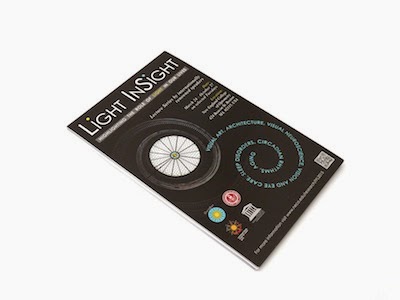
Light InSight postcards!

20141226


20141202
upcoming Light InSight
**BZ is excited to be part of the Light InSight Lecture Series at NECO/International Year of Light (2015). Stay tuned!

NECO dome (photo via Lee Kennedy)
Light InSight Lecture Series
The International Year of Light (2015) is a global initiative of the United Nations General Assembly that will increase awareness of the importance of light and light-based optical technologies in our lives. As part of this initiative, the New England College of Optometry (NECO) will present a speaker series to celebrate the International Year of Light called The Light InSight Lecture Series. Held at NECO, this lecture series will host speakers from the areas of visual arts, architecture, visual neuroscience, eye care, sleep disorders, circadian rhythms and aging, among others. The Light InSight Lecture Series will run on Tuesday evenings at 5 pm from March 2015 to October 2015

NECO building @Back Bay, Boston (photo via My NECO Experience/ Emily)
Light InSight Speaker Series Schedule
3/24/2015 David R. Williams, Center for Visual Science, University of Rochester
Topic: Adaptive Optics Retinal Imaging
3/31/2015 Bevil Conway, Dept. of Neuroscience, Wellesley College
Topic: Vision and Visual Art
4/7/2015 David Berson, Dept. of Neuroscience, Brown University
Topic: Intrinsically Photosensitive Retinal Ganglion Cells
4/14/2015 Charles Czeisler, Division of Sleep Medicine, Harvard Medical School
Topic: Neurobiology of Circadian Rhythms
4/21/2015 tentative speaker date
5/26/2015 Zenovia Toloudi, Arts & Sciences, Dartmouth College
Topic: Manipulation of Light in Architecture
6/23/2015 Frances Rucker, New England College of Optometry
Topic: Light and Development of Refractive Error
7/21/2015 Susana Marcos, Instituto de Optica, Madrid
Topic: Aberrations of the Eye
8/25/2015 Mark Rea,Lighting Research Center, Rensselaer Polytechnic Institute
Topic: New Lighting Technologies
9/8/2015 Jane Gwiazda, New England College of Optometry
Topic: Light as a Potential Treatment for Myopia in Children
9/15/2015 Francois Delori, Schepens Eye Research Institute
Topic: Lipofuscin and Light Hazards
9/22/2015 Richard Masland, Ophthalmology, MEEI, Harvard Medical School
Topic: Optogenetics in Retinal Degenerative Diseases
10/6/2015 Debora Nickla, New England College of Optometry
Topic: Circadian Rhythms and Emmetropization
10/27/2015 Jack Werner, Ophthalmology & Vision Science, University of California, Davis
Topic: Art, Aging and the Visual System
International Year of Light
Activities for the International Year of Light are planned for people of all backgrounds so that they can understand and appreciate the role of light in their lives. Light has revolutionized medicine and communication (internet) and plays an important role in cultural, economic and political aspects of today’s society. The International Year of Light will enable scientists, engineers, artists, writers and others to interact, so as to learn more about the nature of light. Opening ceremonies for the program of international events will occur on January 19-20th, 2015. Learn more about the UN’s International Year of Light, www.light2015.org, and the event program
20140506


20140313

20140312


20140201
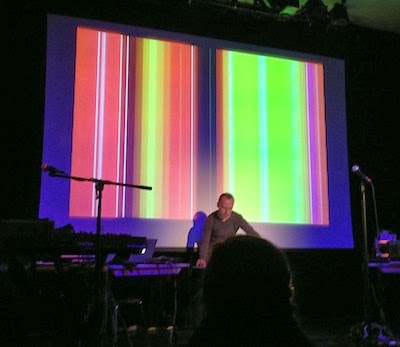
the garage
Very exciting work at Thesis Lab 2014: The Garage by Patrick Brady and Thomas McCormack


The Garage is a canvas for the cultivation of ideas, research, and experimentation. It exists as a publication and web archive attempting to curate dialog. For design graduates they face a funeral of ideas and work upon graduation. As stated in our mission statement projects are tucked into closets and unseen portfolios with no room to the breathe. The Garage aims to open these ideas up for discussion, let them air out, and connect people. (Text via Patrick Brady)
Submit your ideas at: thegaragevolume1@gmail.com
20131119
the architecture of display, you, and some other aqua-species
Can a prison for exotic animals and rare species, be your getaway spectacle for 25$? There are rules, rituals, and considerations, but at the end of the day, you rule, and they adapt to you.
A human being enters the tank to start feeding the domesticated creatures. The human being touches the fish and rewards it; as if the last can feel? Are there feelings and emotions among these other species? You are not supposed to tap the glass and bother the fish but there is no such a sign when there is a jelly. Other labels imply your superior nature against "the brainless, boneless creatures" or indicate a "fair" exchange between your playing (with the torch light) and their (need for?) training (in the case of penguins). Sometimes they even protect you from animals' (unacceptably?) aggressive swimming, like in the case of the trapped sea lions.
A clear sacrifice of these animals for your knowledge, awareness, and entertainment. Claustrophobia for them, while circling eternally around the same spot, functions greatly for your phantasmagorical display. Artificial color in the tank creates a new kind of "ecosystem," perfect as background for your photos or to nurture your imagination. You get the greatest performance in front of your eyes and children, the perfect documentation of your weekend activities.
In this spectacle, the director did not follow the latest theories of performance and engagement: there is a clear separation between the actor, and the audience. Or did the operator took engagement further, to convert the spectator as the ruler? And how about the animals rights? The aquarium is not there to remind how small, how insignificant you are in this universe; on the opposite, it highlights man's dominance on earth, it nurtures your ego, the "macho" in you.
20131104

20131020
Z @ CoF
THE ARCHITECT’S TECHNO-PEDAGOGY TOOLKIT
Following the advent of digital and information technologies, many architecture schools currently prioritize a “digital architecture” approach that frames technology through fabrication and scripting. As a critique to this trend, my teaching pedagogy investigates the new role of technology in design through the lens of culture, craftsmanship, and user perception. This approach suggests the expansion to a wider exploration of technological methods to be researched and associated to design: These range from social platforms and collective intelligence, digital culture and anthropology, storytelling and web journalism, neuroscience and cognition, to games, visualization and mapping, scripting, and fabrication, among other. To further define the architect’s techno-pedagogy toolkit, I have developed a process that involves mixed media and experiment-based approaches: the design and construction of interactive prototypical installations; the development of software participatory platforms; and the conduction of experiments using both the installations and the platforms to collect and analyze user data.
The above text is the abstract of my upcoming presentation at the Annual Colleges of the Fenway (CoF) Teaching and Learning Conference, between 14-15th of November. Keynote speakers include Dr Chris Dede from Harvard Graduate School of Education, and Colleen Macklin from Communication Design & Technology at Parsons The New School for Design
Labels: boston
20130701
n-gon


The installation took place in the 1818 Powder Magazine building
Labels: architecture, boston



Zenovia Toloudi is architect, artist, and Assistant Professor at Studio Art, Dartmouth College.
NOW
- studio Z
- Z profile
- ZITOFOS
- PICANICO
- recent projects
- Agora studio
- pop-up store workshop
- photodotes III: plug-n-plant
- Right to Architecture Symposium MIT
- ACSA San Francisco
- Food Truck Conference
- Atmosphere Symposium
- MIT Museum
- MIT Museum
- Energy Night MIT
- OFF/ON lecture
- Urban Micro-Oasis workshop
- Made in Greece Plus
- Crisis Panel @ GSD
- For-here-or-to-go? cloud
- The Garden Lab
- Photodotes II
- Photodotes I
- To Extremes
- Thesis Lab @ WIT
- Protheses @ WIT
- pechakucha boston No 4-26
- brain.storms
- gnomi award
- F2F
- festival miden
- un-built [MCUS in athens]
- eikones.ch [switzerland]
- design computing + cognition [DCC08]
- critical digital conference: what matters[s]?
- pecha kucha talk
- 1st thessaloniki biennale of contemporary art
- arch.city.art
- talk20
- Black with a Red Touch
- A Private or Public Sleeping Space?
- Archipelago Logic: Environmental Site Specific Art
- Goodbye Starachitecture, Welcome Countryside! Dis-appearances in Rem’s Lecture
- On Game Design: The New Spaces, Objects & Methods of FWD Talks
- The Participant, the Experience, and the Event: Experience Economies
- Towards an eternal contemporaneity: A playground of living systems, physical states, and phenomena
- Playing with circles, curves, and SO-IL
- MIT Media Lab: Architecture as a living organism
- Lichtballett: Can space be shaped out of light, sound, and movement?
- 200602
- 200603
- 200604
- 200605
- 200606
- 200608
- 200609
- 200610
- 200611
- 200612
- 200701
- 200702
- 200703
- 200704
- 200705
- 200706
- 200707
- 200708
- 200709
- 200710
- 200711
- 200712
- 200801
- 200802
- 200803
- 200804
- 200806
- 200807
- 200808
- 200809
- 200810
- 200811
- 200812
- 200901
- 200902
- 200903
- 200904
- 200905
- 200907
- 200909
- 200910
- 200911
- 200912
- 201001
- 201002
- 201003
- 201004
- 201005
- 201006
- 201007
- 201008
- 201009
- 201010
- 201011
- 201012
- 201101
- 201102
- 201103
- 201104
- 201105
- 201106
- 201107
- 201108
- 201109
- 201110
- 201111
- 201112
- 201201
- 201202
- 201203
- 201204
- 201205
- 201206
- 201207
- 201208
- 201209
- 201210
- 201211
- 201212
- 201301
- 201302
- 201303
- 201304
- 201305
- 201306
- 201307
- 201308
- 201309
- 201310
- 201311
- 201312
- 201401
- 201402
- 201403
- 201404
- 201405
- 201406
- 201407
- 201408
- 201409
- 201410
- 201411
- 201412
- 201501
- 201502
- 201503
- 201504
- 201505
- 201506
- 201507
- 201508
- 201509
- 201510
- 201511
- 201512
- 201601
- 201602
- 201603
- 201604
- 201605
- 201606
- 201607
- 201608
- 201609
- 201610
- 201611
- 201612
- 201701
- 201702
- 201703
- 201704
- 201705
- 201706
- 201707
- 201708
- 201709
- 201710
- 201711
- 201801
- 201802
- 201803
- 201804
- 201805
- 201807
- 201810
- 201812
- 201901
- 201903
- 201906
- 201909
- 201911
- 201912
- 202001
- 202002
- 202003
- 202005
- 202006
- 202007
- 202011
- 202101
- 202102
- 202105
- 202106
- 202112
- 202206
- 202301
- 202406
- 202407
- Architecture as Invention
- bz @Changing Cities
- From theatre to factory to...
- work during post-remote (GSD panel)
- Architecture is workshop
- single-minded
- becomes again
- Dedes
- the man is a guest house
- A New Rule
- m&m-M&M
- lsd:mies
- kites
- brazil_2
- sesc-pompeii
- velvet lounge
- ny
- mendes_leme
- mcc_2
- BEE-ZEE is on vacation
- b-z is back to chicago
- you can not invent a new architecure every monday morning
- [ f f f ]
- archidose
- architechnophilia
- archtect-ntua
- architecture
- AR_LAV
- anArchitecture
- angelidakis
- athens9
- BLDGBLOG
- brand avenue
- breathe
- boring pictures
- chicago PLUS
- concrete circus
- dialog
- eikonographia
- eye candy
- gravestmor hello beautiful!icaspace
- interactive architecture dot org
- land+living
- lewism
- liberdade
- life without buildings
- mirage.studio.7
- notArch
- pruned
- sleeper in metropolis
- subtopia
- the erasers
- tropolism
- temp blog
- urbicide
- we make money not art
- αλέξης σταμάτης‚
- art attack‚
- bees
- crazymonkey
- doncat
- ελληνική λογοτεχνία
- eggs.in.art
- παραμυθάς
- 3legdonkey
latest news
WRITING/ REVIEWS
more text
Archives
Previous Posts
BEE-ZEE favorites
architecture
greek text
misc
more bee-zee


